Independent service. BijliBillCheck.pk is not affiliated with, endorsed by or operated by WAPDA, NEPRA, PITC, any distribution company, or the Government of Pakistan.

11 companies · live lookup · no sign-up

Bijli Bill Check — your electricity bill, online in Pakistan

Enter the reference number printed on any past bill and this month's statement appears at once — MEPCO, LESCO, FESCO, IESCO and every other distribution company. Read it on screen, save it, print it, or pay straight from it.

Where it comes from
The official PITC billing system
What it costs
Nothing, and no account is created
What you need
One 10–14 digit reference number
Table of contentsEverything on BijliBillCheck.pk, in one list412 pages, grouped by the job each one does

Where we stand

What this tool is, and what it isn't

The bill is your distribution company's document. All this site does is get you to it faster. Saying that plainly seems better than letting anyone assume otherwise.

Nothing is recalculated

What appears on screen is whatever PITC returned for your reference number. No slab is recomputed here, no amount restated, no date adjusted. If a figure looks wrong, it is wrong on the official record too — and that belongs with your DISCO.

No account, no gate

Nothing to sign up for, no password to lose, no trial that quietly becomes a charge. A reference number and a working connection are the entire requirement — as true on a weak mobile signal as on fibre.

Context beside the number

A number by itself tells you nothing about whether it is fair. FPA, the slab boundaries and the payment routes are written up here, so you can separate an ordinary month from one worth taking further.

How it works

One number in, the real bill out

No queue at a subdivision counter, and no waiting on a paper copy that never came.

The duplicate, in seconds

Identical line items, identical reference, identical amount to the printed original. Send it to a printer, or keep the PDF for a bank or a landlord.

Built for the phone first

The bill fits the screen you are holding rather than forcing you to pinch and drag around a desktop-width page. There is nothing to install.

Nobody is watching you read it

No ad network, no analytics, no tracking cookie of any kind. The single outbound request any page here makes is the one that goes to PITC for your bill.

Reading the bill

What every line on your bill means

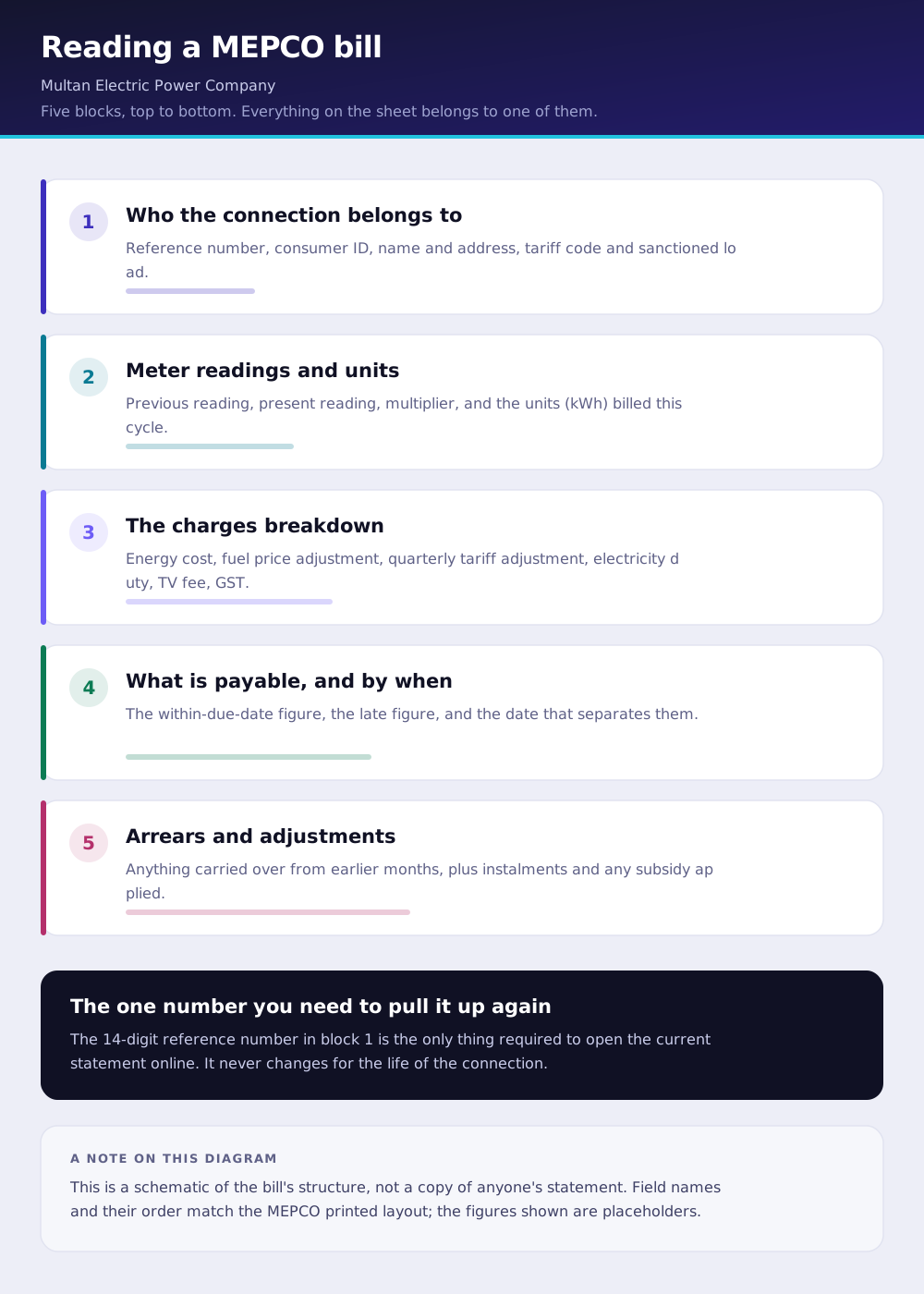
Nine fields account for almost any total you will ever see. Read these before deciding a bill is wrong — usually one of them explains it.

  • Reference number

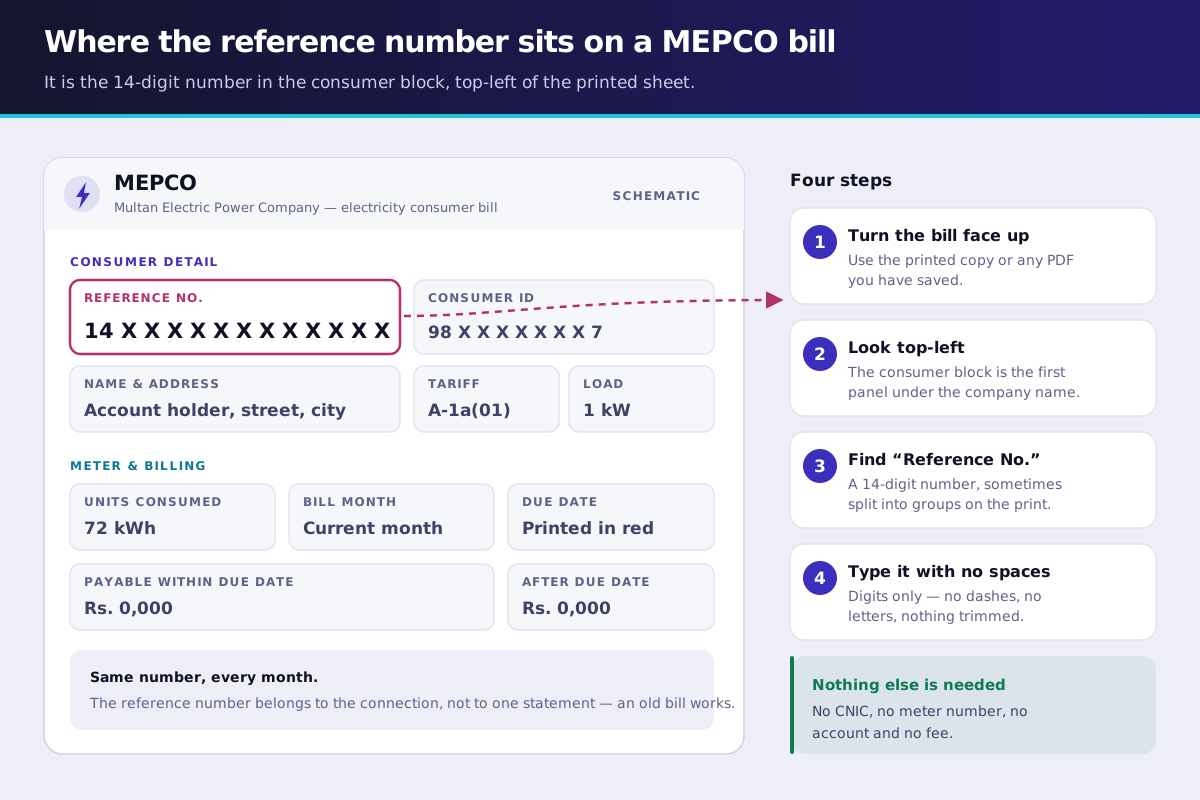
    The 10–14 digit identifier for your meter, printed top-left. It belongs to the connection, not to you, so it survives a change of tenant.

  • Previous & current reading

    The two meter figures this bill is calculated from. Their difference, times any multiplier, is your units.

  • Units consumed

    Total kWh for the cycle. This single number decides which slab you land in, so it is the first thing to compare month to month.

  • Tariff & slab category

    Domestic, commercial, industrial or agricultural — and within domestic, protected or unprotected. It sets the rate applied to every unit.

  • FPA / Fuel Price Adjustment

    NEPRA's monthly correction for what generation actually cost. It moves independently of your usage and can be a credit.

  • GST, TV fee & surcharges

    Government levies stacked on the energy charge: sales tax, the PTV fee, the Financing Cost surcharge and TRS where it applies.

  • Meter rent

    A small fixed charge for the meter hardware. It does not move with consumption — the same figure appears every month.

  • Arrears

    Anything unpaid from an earlier cycle, carried forward. A sudden jump with flat usage is often this rather than a rate change.

  • Due date & the after-due amount

    Two figures, not one. The second includes the Late Payment Surcharge and applies the moment the first date passes.

Something here not matching your own bill? Work through the common causes before you queue at the subdivision office.

Once you have the amount

Where to actually pay it

Money never passes through this site. Every channel below asks for the same reference number you already have.

Full payment guide

Mobile wallets

JazzCash and Easypaisa, in-app or on *786# from a basic handset.

Bank apps

HBL, UBL, Meezan, MCB, Allied and most others carry a bill-payment section.

ATM & branch

Bill payment at the ATM menu, or over the counter with cash.

DISCO & post office

Your own subdivision office and many Pakistan Post branches accept payment.

Hold on to the transaction ID until the payment appears on next month's bill. If one goes missing, that is the only evidence you can produce quickly.

Four steps

Checking a bill, start to finish

  • 1Read off the reference number — 10 to 14 digits, printed at the top of any bill you still have.
  • 2Pick the company — MEPCO, LESCO, FESCO or whichever supplies your address.
  • 3Submit — the official duplicate comes back from PITC and opens on screen.
  • 4Keep a copy — print it, or save the PDF for a bank, a landlord or your own file.

The longer walkthrough →

Written guides

Articles on bills, tariffs and savings

Longer pieces on understanding a bill, keeping it under control, and bringing it down.

Prepaid vs Postpaid Electricity Meters

Compare prepaid and postpaid electricity meters in Pakistan — how each works, pros and cons, costs, and which option suits your household better.

Reading Your Meter: Digital vs Analog

Learn how to read analog and digital electricity meters in Pakistan, understand kWh units, and verify your bill matches your actual meter reading.

View all guides → · Resources · Problem solving · Bill calculator

FAQ

Questions people actually ask

Short answers on checking, reading and paying an electricity bill in Pakistan.

How do I check my electricity bill online in Pakistan?

Copy the 10–14 digit reference number off any bill you already have, pick the company that supplies your area — MEPCO around Multan, LESCO in Lahore, and so on — and submit. The duplicate arrives from the PITC billing system and appears on screen, ready to read, print or keep as a PDF. Nothing is registered and nothing is charged.

Can I check my electricity bill without a reference number?

No, because PITC itself has no other way in — the whole lookup is keyed on that number. Recovering it is usually quick: it is on every past bill, in the billing SMS your company sends, and on payment receipts. If all of those are gone, customer care can read it out once they have verified the account. Look for 'Reference No.' or 'Consumer Reference', 10 to 14 digits long.

Can I download and print my duplicate electricity bill?

Yes. With the bill open, print it as you would any web page — Ctrl+P on a laptop, or the share/print item in a phone browser's menu. Choosing 'Save as PDF' instead of a printer gives you the file, which is what most offices and banks actually want.

Is BijliBillCheck.pk an official government website?

It is not. This is an independently run tool: it asks the official PITC portal for your bill and shows you exactly what comes back, unedited. We are not WAPDA, not NEPRA, not PITC and not a distribution company. Anything that touches the account itself — a power cut, a reading you dispute, an amount that looks wrong — has to go to your own DISCO.

How fast does a bill check take?

A few seconds in normal conditions. What slows it down is PITC's own server, which comes under load around billing dates each month. If the result comes back empty, check the digits against the printed bill before trying again — a single wrong figure returns nothing rather than an error message.

Which electricity companies are supported on BijliBillCheck.pk?

Every one of the eleven distribution companies billing through PITC: MEPCO (Multan and southern Punjab), LESCO (Lahore), FESCO (Faisalabad), IESCO (Islamabad and Rawalpindi), GEPCO (Gujranwala), PESCO (Peshawar and Khyber Pakhtunkhwa), HESCO (Hyderabad and lower Sindh), SEPCO (Sukkur and upper Sindh), QESCO (Quetta and Balochistan), TESCO (the tribal districts) and HAZECO (Hazara division).

Does BijliBillCheck.pk support K-Electric (Karachi) bills?

No. K-Electric runs its own billing platform with no connection to PITC, so a reference number typed here would never reach it. If you are in Karachi, use ke.com.pk and your 13-digit consumer number instead.

What is the difference between WAPDA and my DISCO?

Mostly habit. Everyone still says 'WAPDA bill', but the document in your hand is issued by a distribution company — MEPCO, LESCO, FESCO or whichever covers your address. WAPDA is the parent authority above them; the bill itself is a DISCO document generated through PITC.

What is FPA (Fuel Price Adjustment) on my electricity bill?

A monthly correction, set by NEPRA, for what generating the electricity actually cost — furnace oil, coal, imported LNG. Some months it adds to the total; occasionally it credits you. FPA is the usual explanation when the bill changes but your units did not.

Why is my electricity bill higher than usual?

Take it in order. Did the units rise — cooling in summer, heating in winter? Did the extra units push you across a slab boundary, so they cost more per unit than the ones before them? Was FPA positive this cycle? Is there anything carried over, or a late surcharge? Holding this month's bill next to last month's and comparing the units and FPA lines resolves most of these in about a minute.

What is a slab rate on my electricity bill?

A stepped price ladder. Each band of monthly units costs more per unit than the band beneath it, so the bill climbs faster than consumption does. Staying at or below 200 units a month keeps a household in the protected, subsidised category — which is exactly why watching your units matters most when you are close to a boundary.

What are peak hours and off-peak hours on my bill?

These only apply on a Time-of-Use meter. Where one is installed, roughly 7 PM to 11 PM is billed at the higher rate and the rest of the day at the lower one, so moving the air conditioner, iron or washing machine outside that window is where the saving is. On an ordinary meter, the time of day makes no difference at all.

What is a protected vs unprotected consumer?

Protected means a household staying at 200 units a month or less, billed on NEPRA's subsidised slab rates. Go above that and you are unprotected, on full rates, and the gap between the two is large. Your bill prints which category you are in.

Can I pay my electricity bill through BijliBillCheck.pk?

No — this site shows bills and never touches money. Take the reference number to JazzCash, Easypaisa, your bank's app, an ATM or an authorised counter; that number is the only thing any of them asks for.

How do I pay my electricity bill using JazzCash or Easypaisa?

In the app, open bill payment, choose your distribution company, enter the reference number, and compare the amount it shows against the bill before you confirm. Without a smartphone, dialling *786# walks through the same steps over USSD. Hold on to the transaction ID until the payment shows up on a later bill.

What is the difference between previous and current meter readings?

Both are printed on the statement. The difference between them, multiplied by any meter multiplier, is the units you are being billed for. If either number looks wrong, that is a matter for your distribution company — we display what PITC returns and have no way to change a reading.

What is Late Payment Surcharge (LPS) on my bill?

The penalty that kicks in once the due date has passed. It is the reason every bill prints two totals: one if you pay in time, a larger one if you do not. Pay against the first figure and the second never applies.

How do I save my duplicate bill as a PDF?

Open the browser's print dialog with the bill on screen — Ctrl+P, or the share menu on a phone — then choose 'Save as PDF' where the printer would normally be. What you get is byte-for-byte the document PITC produced, which is what banks, landlords and government offices are usually asking for.

Can I check bills for commercial or industrial connections?

Yes, and the lookup itself is identical as long as you have that connection's reference number. What differs is the bill: commercial and industrial categories (B-1, B-2, C-1, D-1) are priced and taxed differently from a domestic account.

I lost my old bill — how do I find my reference number?

Work down this list: the billing SMS from your company, receipts in JazzCash or Easypaisa, your bank's transaction history, and finally the subdivision office. Because the number is attached to the meter rather than to one statement, even a receipt from several years ago will still be correct.

How often is my electricity bill issued?

Once a month for most households, though the exact cycle varies by area and connection type. The billing month and issue date printed on the sheet are what define the period you are actually being charged for.

What is NEPRA and why does it affect my bill?

NEPRA regulates electricity nationally. It sets the slab structure, approves the FPA, and signs off the quarterly tariff adjustments and other mandated surcharges that appear as line items on your bill. When the rate changes and your usage has not, a NEPRA determination is normally the reason.

Who do I contact for outages, wrong readings, or billing disputes?

Your own distribution company, on the helpline printed on the bill — 080066006 for MEPCO, 111-000-118 for LESCO, and so on. If it stalls there, the Prime Minister's Delivery Unit and NEPRA's consumer complaint portal are the next steps. We hold no account or metering records and cannot act on your behalf.

The long version

How billing actually works in Pakistan

Ten things worth understanding about the document you just opened — where it comes from, what sets the number, and who to go to when it looks wrong.

01

WAPDA electricity bill check online, without the paperwork

Ask anyone in Pakistan and they will call it a WAPDA bill. In fact the sheet that reaches your door is issued by a distribution company and printed centrally by PITC — the Power Information Technology Company — and that central system is the one this page queries. Give it a reference number and back comes the same duplicate bill a sub-division counter would print for you: the electricity tariffgenuinely applied to your meter, whatever arrears exist, the month's FPA, and the due date that actually matters. A tube-well in a village and a house on a five-marla plot take the identical route through it.

02

Getting the duplicate bill from a reference number

It comes down to one field. The reference number runs 10 to 14 digits and sits at the top of any bill you have held on to; in some regions a shorter consumer numberis printed next to it. Nothing is registered, so there is no password to forget. With the bill on screen, your browser's print dialog will either send it to a printer or save it as a duplicate PDF — and that file is what banks such as HBL, UBL, Meezan and Allied work from, along with post offices and every mobile wallet. Landlords, employers and tax filings usually accept it for the same reason they accept the original: it is the official document rather than something rebuilt from it.

03

Slab rates, NEPRA tariffs and why the total moves

NEPRA sets what a unit costs, and it is deliberately not a single figure. The tariff is banded, so your first units are cheaper than your last, with the breaks that matter for domestic accounts falling near 100 and 200 units consumed. Stay at or under 200 a month and the household counts as protected, on subsidised rates; cross it and you move onto the unprotected schedule, where the increase is larger than the handful of extra units would suggest. Separately, a TOU smart meter charges more during the evening peak than off-peak. Put the slab structure, the monthly FPA and the quarterly tariff revisions together and there are three independent ways for your bill to move in a month when nothing about your household did.

04

Every DISCO on the PITC platform

Eleven companies divide the country between them, Karachi aside. Punjab is split four ways plus the capital: MEPCO across Multan, Bahawalpur and Dera Ghazi Khan; LESCO over Lahore, Kasur and Okara; FESCO around Faisalabad, Sargodha and Jhang; GEPCO in Gujranwala, Sialkot and Gujrat; and IESCO covering Islamabad, Rawalpindi and Attock. Khyber Pakhtunkhwa has PESCO from Peshawar through Mardan and Swat, HAZECO for the Hazara division, and TESCO in the tribal districts. Sindh is shared by HESCO (Hyderabad, Nawabshah) and SEPCO (Sukkur, Larkana); Balochistan belongs entirely to QESCO, from Quetta out to Gwadar and Sibi. Karachi is the one gap: K-Electric bills on its own platform, and no site outside ke.com.pk can reach it.

05

The charges underneath the total: FPA, GST, TV fee and the rest

Surprisingly little of a Pakistani electricity bill is the electricity. The most volatile line is FPA — Fuel Price Adjustment, written FCA in some coverage — which follows what furnace oil, coal and imported LNG actually cost generators that month, and which lands as a credit about as often as it lands as a charge. Sitting around it: the PTV TV fee, GST taken as a percentage, the Financing Cost surcharge, meter rent on connections that carry it, and withholding tax on commercial and industrial accounts. The duplicate itemises every one, alongside the previous and current meter reading, the issue date and the billing month — which is why it settles the question of whether a nasty total came from your own usage or from something decided in Islamabad.

06

Who does what: DISCOs, CPPA, NEPRA and the WAPDA name

The machinery behind one bill is longer than anyone needs it to be. Generation companies make the electricity; the transmission network carries it; the CPPA runs the purchasing arrangements that feed the tariff and adjustment formulas; NEPRA regulates and fixes the rates; and your DISCO delivers the power and sends the bill. WAPDA is simply the older parent name that never left everyday speech. The vocabulary is worth having because tariff notifications and news reports assume it — but the day-to-day job stays small: find the reference number, read the units, keep an eye on the slab, pay before the date.

07

What we do and do not do with your bill

How a web billlooks is PITC's decision, not ours. We hand over your reference and display whatever comes back. Nothing on this site is estimated — not the unit price, not the slab arithmetic, not the arrears — which is exactly what makes the printout usable when somebody else has to accept it: same structure, same figures, same document your DISCO holds. The same fact draws the limit. If a reading is wrong, we have no way to correct it, and the honest answer is that it belongs with your distribution company rather than with a third-party viewer.

08

Reference number, consumer number, and what else is on the sheet

Every bill check online turns on the reference number, and because that number is attached to the meter rather than to a person, a receipt from several years ago is usually still the right one. The sheet carries a good deal besides: the feeder name, the sub-division, and the connection type — single-phase or three-phase. For most households the rest can be ignored in favour of two figures, kWh and slab tier, and those matter most through the seasonal swings when cooling or heating is doing the work. Commercial and industrial accounts have more to read — maximum demand, power factor, and separate time-of-use registers.

09

Paying: wallets, bank apps, ATMs and counters

With the amount in front of you, the reference number is all any channel wants. JazzCash and Easypaisa reach most of the country, and both run over *786#for anyone without a smartphone; NayaPay and SadaPay behave the same; every mainstream banking app has a bill-payment section; and ATMs and post-office counters still take cash against the number. Whichever you pick, hold on to the transaction ID until the payment turns up on next month's bill. If something does go astray, that receipt is the only piece of evidence you can produce quickly.

10

Cutting the bill: timing, hardware and the slab boundary

On a TOU meter the cheapest saving available costs nothing but attention: push the flexible load — water heating, laundry, a second air conditioner — out of the evening peak. Everything after that is about pulling the baseline units consumed down, and the reliable moves are inverter cooling in place of conventional, LED lighting throughout, and insulation or shading wherever the heat is actually getting in. Knowing roughly where your monthly total lands matters because of the slab structure: a household sitting just above a boundary recovers more than the units it saved, and is much less exposed the next time FPA goes up.

11

MEPCO, LESCO, QESCO — the same task under different names

The search box gets a hundred versions of one question. A MEPCO bill. A LESCO duplicate bill. A FESCO online bill. An IESCO bill check. A PESCO bill by reference number. GEPCO bill online, HAZECO, a HESCO duplicate, a SEPCO bill, QESCO bill check online, a TESCO bill — and in every case the underlying task is identical: fetch the official duplicate for a reference number that exists. The questions that follow are just as predictable. What is the unit rate this quarter. What the fixed and minimum charges are. Why a late payment surcharge appeared. When load shedding hits this particular feeder. How the net metering paperwork runs. Whether solar pays for itself at current tariffs. Where an accurate answer exists — the bill, and how tariff, slabs, FPA and peak hours land on it — you will find it here. Where it needs access to your account, the answer is your DISCO, and we say so.

Have your reference number handy?

That is all it takes. Scroll back up and enter it, or pick your distribution company from the list first.